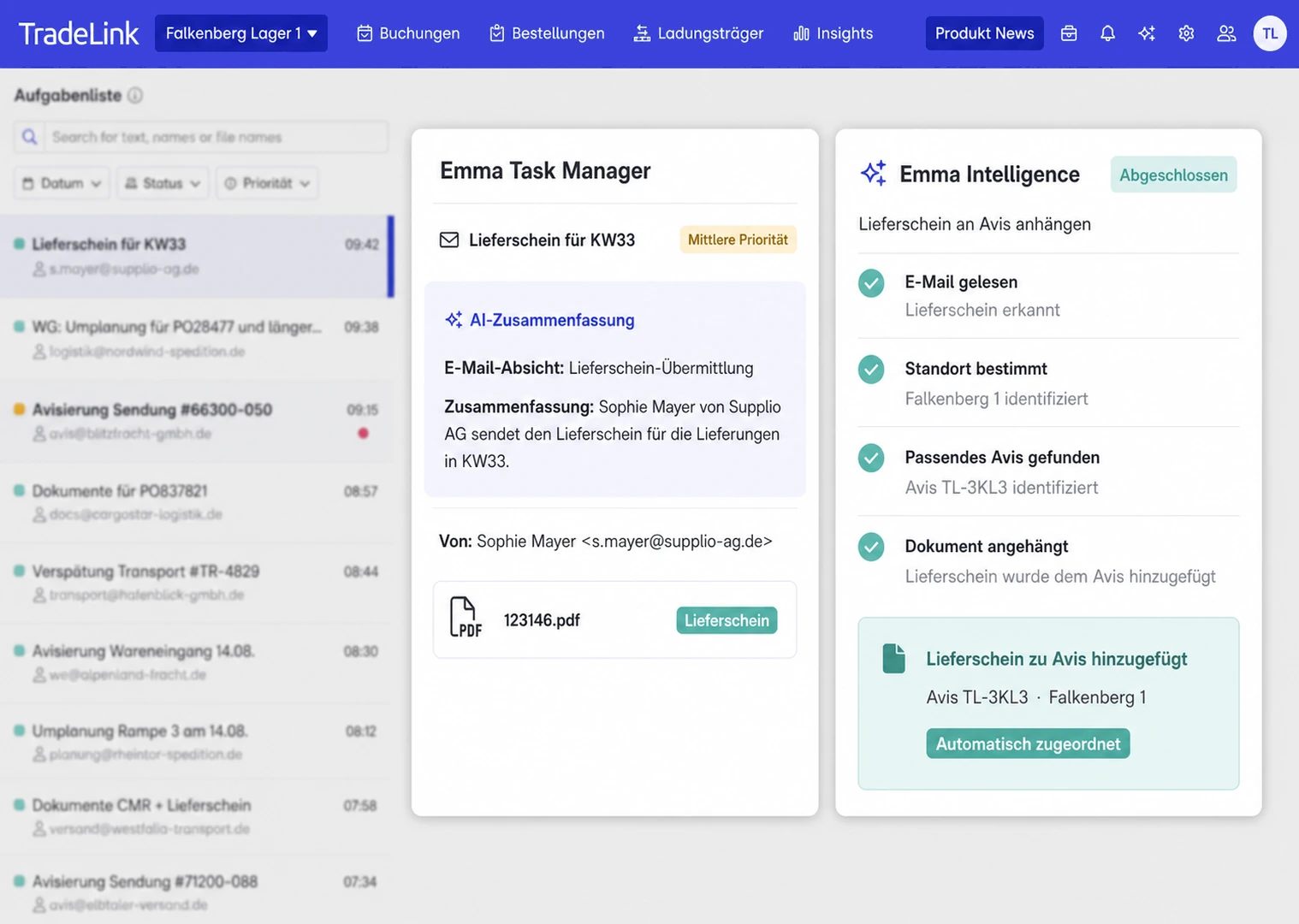
Truck congestion at the factory gate, spontaneous deliveries, and a lack of visibility into time slots – many logistics managers know these challenges all too well. Yet, the receiving department is a key lever for greater supply chain efficiency. In this article, we show you how to make your truck deliveries more efficient through smart planning, digital tools, and clear processes – thereby reducing downtime, deploying staff more effectively, and cutting costs.
Why efficient truck delivery planning is critical
A smooth workflow at the receiving dock begins with precise truck delivery planning. Optimizing this area helps avoid congestion at the ramp and bottlenecks in the warehouse. The key benefits at a glance:
1. Shorter wait times, lower costs
Well-planned deliveries reduce wait times – and therefore demurrage charges. This allows ramps to be used more efficiently and prevents delivery delays.
2. Better resource utilization
When it is clear which truck is arriving and when, staff and warehouse space can be scheduled precisely. This increases productivity in day-to-day warehouse operations.
3. Greater transparency and responsiveness
With digital tools, teams can keep track of scheduled time slots and actual arrival times. Changes can be accommodated flexibly.

Tips for efficient truck delivery planning
Here are some fundamental steps you should consider for more efficient delivery planning:
1. Early coordination with suppliers and carriers
Early communication with suppliers and carriers is the first step toward accurately planning delivery times. Fixed time slots help avoid congestion and ensure that resources are used optimally. A set communication plan, such as regular updates on the current delivery status, supports this process.
2. Use of time slot management software
Time slot management software allows you to reserve a specific time slot for every delivery. These tools coordinate arrival times and ensure that deliveries are evenly distributed throughout the day. This helps avoid peak times and keeps loading docks clear for the next delivery.
3. Real-time updates and flexibility
Trucks can be delayed for various reasons, such as traffic disruptions or weather conditions. With real-time updates , all parties involved stay informed, and delivery schedules can be adjusted flexibly. This allows for quick identification of alternatives and ensures the continued availability of loading docks.
4. Prioritizing and scheduling buffer times
Not every delivery carries the same weight. Urgent deliveries should be prioritized and scheduled accordingly. Incorporating buffer times also helps to compensate for spontaneous changes and ensures that operations run smoothly, even when unforeseen delays occur.
5. Regular evaluation and adjustment of planning
The logistics industry is dynamic, and even well-thought-out plans can reach their limits in practice. Regular analysis and adjustment of delivery planning helps to identify weaknesses and further optimize processes. The data collected from planning processes provides valuable insights for continuously increasing efficiency.

Efficient tools for planning truck deliveries
Modern technologies and software solutions offer valuable support for the planning and coordination of deliveries. Here are some of the best tools:
1. Time slot management software
This type of software, such as TradeLink, provides a platform for coordinating arrival and departure times and optimizing loading dock utilization. Through time slot management and real-time updates, warehouse managers and carriers always know when trucks will arrive and if there are any changes to the schedule.
2. Tracking and telematics systems
Tracking systems, often integrated with telematics solutions, provide continuous monitoring of trucks along their routes. These systems offer accurate arrival forecasts, allowing the warehouse team to react immediately to any deviations. This helps catch delays early and keeps planning flexible.
3. Mobile communication apps
Apps specifically designed for logistics simplify communication between drivers, carriers, and warehouse staff. With these apps, all parties can be informed of changes in real time. Direct communication via app is faster and more efficient than traditional methods like phone or email, supporting more effective planning.
4. Analytics and reporting tools
Analytics tools provide valuable insights into the performance of delivery scheduling. They capture data on dwell times, utilization, and punctuality, helping to identify and resolve bottlenecks and planning delays. Regular reports contribute to long-term process improvement.
5. Real-time communication platforms
Platforms like TradeLink allow for the centralized management of all information and provide real-time communication. This is particularly helpful when multiple delivery partners are involved. These tools ensure transparency and make planning smoother.
Conclusion: How to achieve efficient truck delivery scheduling
Efficient truck delivery scheduling is a critical component of productive and cost-effective logistics. With the right preparation, real-time communication, and the use of modern tools, companies can plan their deliveries more precisely and minimize disruptions.
Time slot management software and tracking systems are just two of the many ways to improve planning processes and ensure smooth coordination at the loading dock. By strategically utilizing available technologies and continuously evaluating their processes, companies can increase efficiency across the entire supply chain and boost customer satisfaction.
Looking to optimize your deliveries?
Discover how TradeLink can make your truck delivery scheduling more efficient. Request a free demo and learn how our software solution can improve your logistics processes.