In many companies, the reality is this: numerous tools for procurement, logistics, warehousing, and distribution, but they rarely speak the same language. The result? Fragmented integration, error-prone processes, and operational uncertainty. Instead of transparency and control, chaos reigns: Excel spreadsheets, phone calls, and paper forms. Especially as volumes rise or during peak season, this creates enormous pressure on day-to-day operations.
The problem: Logistics departments are reactive rather than proactive
A late truck, an incomplete delivery, a misprioritized loading bay—and the entire workflow falters. This vulnerability is not a peripheral issue, but a symptom of a structural problem: processes are not designed with foresight, systems operate in silos, and operational teams are in a state of permanent crisis management.
The solution: Real-time transparency, intelligent integration, and step-by-step automation
Modern technologies, particularly AI-based applications, now make it possible for the first time to secure logistics processes holistically and sustainably. It is not about a "big bang" approach, but about intelligent evolution:
- Integrated system landscapes instead of tool silos: Whether it's an ERP, hardware components like barriers, or partner TMS systems, API-based connectivity creates a seamless flow of data.
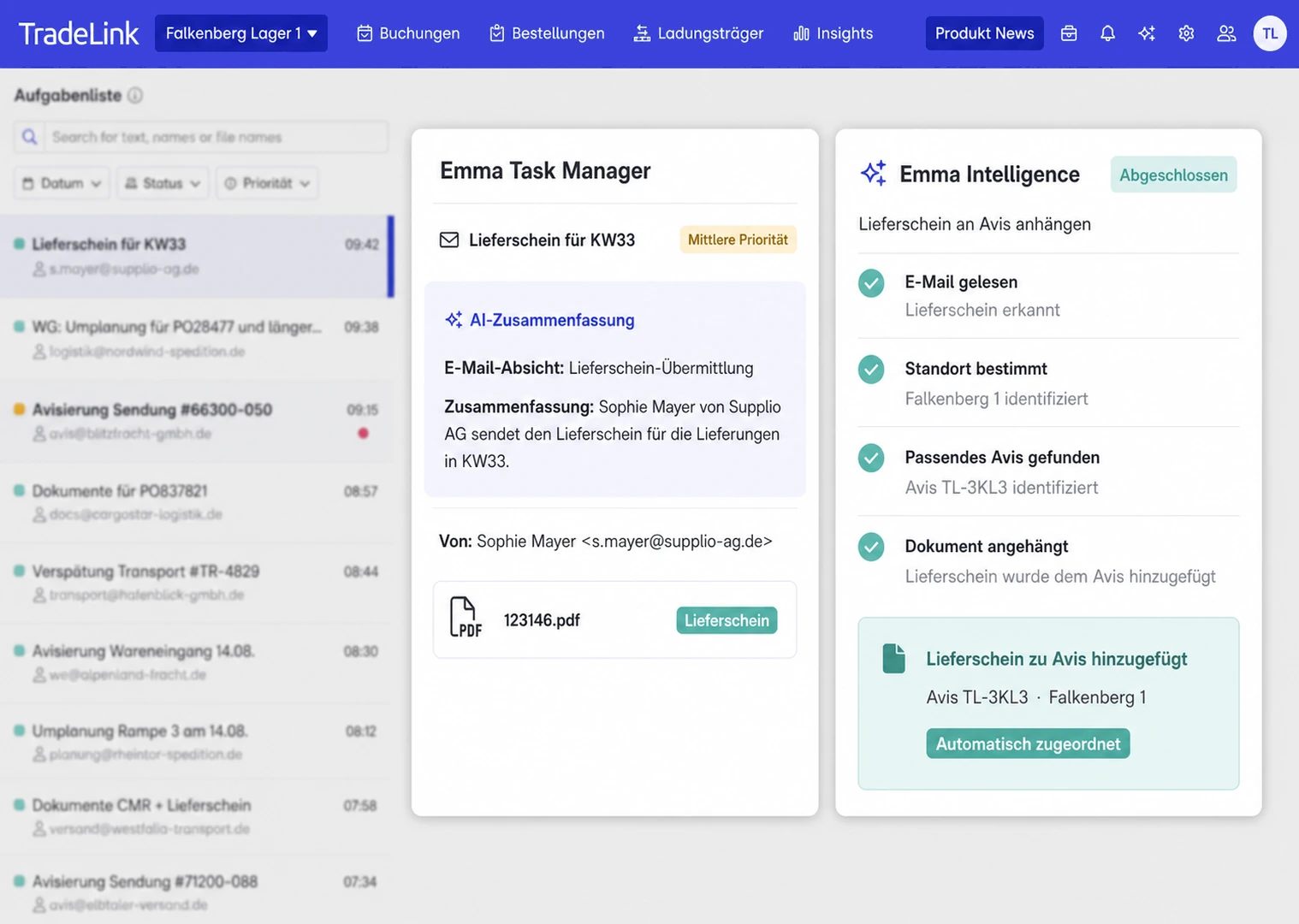
- Document recognition & intelligent response: AI automatically reads delivery notes and freight documents, compares targets with actuals, and triggers automated escalations or recommended actions when discrepancies occur.
- Extended planning horizon + real-time data: Delivery notifications up to two weeks in advance and a live overview of wait times, capacity utilization, and yard movements give teams true control.
Real-world example: FMCG manufacturer scales resilience
An international FMCG client was able to reduce their average truck turnaround time by 32% using TradeLink, simply by automating the notification process and utilizing real-time data for loading bay scheduling. Additionally, SLA compliance increased by 18% and the escalation rate was cut in half.
Mental relief included
Process reliability has not only a technical dimension but a human one as well. Fewer operational disruptions mean less stress, fewer ad-hoc interventions, and fewer inquiries. Teams work in a more structured, targeted manner with clear priorities. Or, as one project manager put it:
“We used to spend all our time putting out fires. Today, we manage the processes, not the other way around.”
Process reliability = Risk management at the site level
To actively manage supply chain risks, you must address them where they actually occur: at the site level. Delivery delays, congested loading docks, and a lack of transparency don't just threaten daily targets—they jeopardize strategic supply chain goals like delivery reliability, quality, and partner satisfaction.
Step-by-step stability (without a major IT project)
Many companies are wary of digital projects. However, modern platform solutions like TradeLink prove that getting started can be low-threshold and free from lengthy IT rollouts. Initial quick wins are achieved through the simple automation of notification processes and centralized communication. This evolves into a growing ecosystem that delivers real efficiency gains:
- Up to 25% capacity increase in administration
- Reduction of internal disruptions by up to 80%
- 15 hours less coordination effort per week, per site
KPI focus for sustainable management
TradeLink gives decision-makers access to relevant real-time metrics:
- SLA fulfillment rates
- First-time arrival accuracy
- Loading dock utilization
- Throughput per day/time unit
- Downtime per truck
These KPIs don't just help with day-to-day operations; they also strengthen your case when reporting to executive management.
The result: regain control and secure your site performance
Process reliability is not just a technical detail; it is the foundation for stable site operations, motivated employees, and satisfied partners. By using a central platform for communication and management, you minimize misunderstandings, escalations, and chaos. Instead of constantly reacting, operational teams can finally act proactively, improve, and grow.
Or, as one TradeLink customer put it:
"Our processes were far too prone to disruption. Today, we work more efficiently, with better data, and with less stress."
Bottom line: If you really want to minimize operational risks and ensure site stability, you need to regain control of your processes using integrated systems, real-time data, and a focus on concrete use cases rather than grand visions. TradeLink provides the foundation for this: simple, scalable, and effective.