Having a delivery date in the ERP system might seem sufficient for the purchasing department at first glance. However, a closer look quickly reveals that this date alone does not solve the challenges of collaboration between internal departments and supply partners, nor the management of modern supply chains . A simple date is not enough to ensure smooth coordination of goods flow and downstream processes in production and shipping. This whitepaper addresses the daily challenges faced by purchasing and logistics departments and explains why a holistic, collaborative approach is necessary. It also introduces TradeLink – a platformthat goes far beyond simple notifications, providing a comprehensive solution for managing orders and deliveries.
Overview of contents
The limitations of delivery dates in ERP systems
While a planned delivery date in an ERP system offers a rough guideline, this information is often insufficient for logistics. The date may refer to an entire calendar week or simply indicate the latest possible delivery date, which is of little help if shipments arrive early or in multiple installments. These nuances are not captured in the ERP and require manual follow-up by suppliers or carriers, preventing logistics teams from planning their processes and resources effectively.
Challenges for purchasing and logistics departments
Purchasing and logistics often operate in separate data silos: order data and shipping notifications. While order data contains expected delivery dates, these are often unusable for logistics. This lack of precision leads to a significant communication burden, as logistics teams must verify individual notifications and reconcile them with the corresponding orders. Delays and unstructured inquiries are common, leading to frustration across all involved departments.
Impact on modern supply chains
The traditional method of recording only a single delivery date in an ERP system stems from a less complex era. Today, however, just-in-time deliveries and global supply chains require more precise and flexible planning. A fictitious delivery date without additional information complicates the planning and execution of processes such as goods receipt and warehouse management. Unforeseen early deliveries or partial shipments cannot be handled efficiently, leading to disruptions in production and shipping. These information gaps impair not only internal operations but also service quality for customers.
Introducing TradeLink: A comprehensive solution
TradeLink provides a platform that consolidates order and delivery data, offering efficient, user-friendly software solutions to manage every step of communication and processing. Integrating TradeLink with existing systems like ERP and WMS enables more precise planning and real-time access to critical data for all stakeholders. Paper-based, manual processes are automated and standardized, resulting in better process control and communication.
Key features of TradeLink
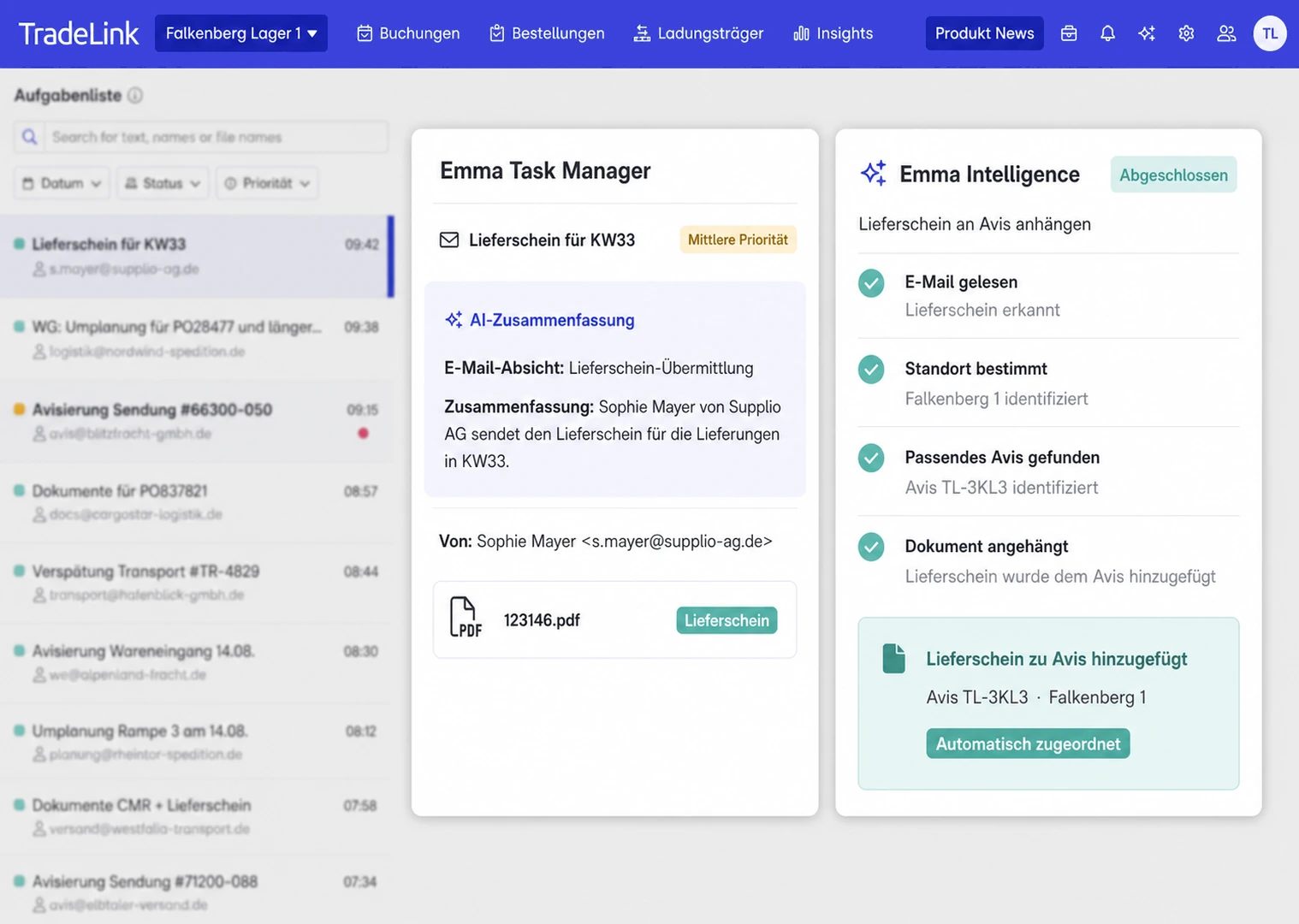
Structured data and digital processes: TradeLink captures diverse data streams from various sources and processes them digitally, whether via API, CSV upload, or AI-based document processing.
Reliable time slot management: Precise scheduling of delivery times prevents congestion and delays, improves resource utilization, and minimizes wait times.
Digital document management: Electronic management of documents such as delivery notes and invoices facilitates access and reduces paper consumption as well as errors caused by lost paperwork.
Delay management: Early detection and communication of delivery delays allow for timely countermeasures and minimize the impact on downstream processes.
Partner collaboration: A shared platform for all partners fosters close collaboration and leads to higher reliability and quality of deliveries.
End-to-end documentation: Complete tracking of all process steps enables the identification and resolution of bottlenecks and inefficiencies.
Benefits for procurement, logistics, and suppliers
With precise delivery data, buyers can plan and forecast more reliably, enabling more efficient inventory management. More accurate delivery data and precise time slot bookings allow for better resource planning and utilization, reduce wait times, and increase productivity. Suppliers have access to up-to-date order and delivery information at all times, which enables better planning and coordination of their own resources and transport. Further benefits are listed in the whitepaper.
The future of ERP and logistics integration
Trends in ERP and logistics software show increasing digitalization and automation of processes. The role of AI and automation in supply chain management is becoming increasingly significant. TradeLink is well-positioned to lead these changes and support companies in optimizing their supply chains.
Conclusion
In summary, precise delivery data and close collaboration between procurement and logistics are crucial for the efficiency and reliability of modern supply chains. A planned delivery date in the ERP alone is not enough to overcome the challenges of today's complex supply chains. TradeLink offers a comprehensive solution that brings together order and delivery data and provides all stakeholders with the necessary information in real time. This optimizes processes, reduces manual work, and improves service quality for customers. Download our whitepaper to gain a comprehensive understanding of the benefits and features of TradeLink.
Why it is important to read the whitepaper:
- To understand why a planned delivery date in the ERP is not enough
- To discover the benefits of a holistic solution for order and delivery management
- To see practical examples and use cases of TradeLink
What readers will gain from this whitepaper:
- Insights into the most common challenges faced by procurement and logistics departments
- A detailed introduction to the TradeLink platform and its features
- Discover the benefits for procurement, logistics, and supply partners